Every year we hear about algal blooms in lake and streams, but did you know that some blooms are toxic while others are not?
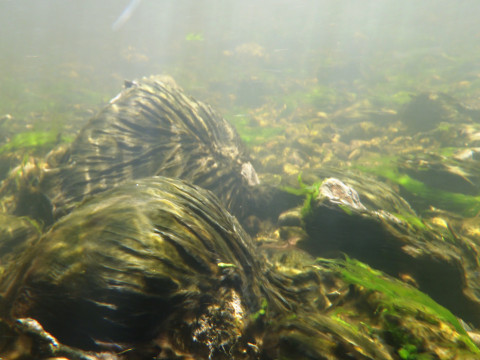
In a unique study, New Zealand researchers are currently using genomics to answer fundamental questions like what switches toxin production on or off in an algal bloom (known in the science world as cyanobacteria).
The ultimate aim is to find ways to manage problem blooms, but to start with, we need to know the basics – what makes these cyanobacteria tick?
The genomics research being done here has already discovered just how genetically distinct the toxic and the non-toxic bacteria are – the differences are marked and scientifically fascinating. And this could provide some fundamental clues to what’s actually going on.
But first, some background on the problem…
Cyanobacteria are microscopic organisms that live naturally in waterways. When these cyanobacteria grow excessively in a body of water they form a bloom and can grow quickly in warm weather, often covering large areas.
But not all cyanobacteria are created equal - only some produce the toxins that can harm people, animals and fish.
Depending on the type, these blooms can be a variety of colours, and produce odours. But you can’t tell if a bloom is harmful just by looking at it or smelling it.
Many New Zealand lakes, rivers and streams are struck by blooms each summer – some multiple times. Councils regularly test for toxic cyanobacteria or algae, and many have warning signs at popular swimming and fishing spots.
Climate change and therefore warmer waters means cyanobacterial blooms are likely to become even more of a problem in the future, so anything science can do to help understand, monitor, predict and ultimately manage or even prevent the issue is welcome.
So far, research has looked at environmental causes like nutrient concentrations in waterways, but this doesn’t give all the answers.
A new approach is needed to get ahead of a blooming problem, and emerging genomic technologies present brand-new opportunities.
Using genomics to better understand cyanobacteria
The University of Auckland and Cawthron Institute in Nelson is using a Royal Society Te Apārangi Marsden Fund grant to understand the role of toxicity in the evolution of bloom-forming cyanobacteria, led by Associate Professor Kim Handley (University of Auckland) and Dr Laura Kelly (Cawthron Institute).
The research draws on an Environmental Metagenomics project funded by Genomics Aotearoa and managed by Dr Handley as part of a collaboration with Dr Susie Wood from the Cawthron Institute.
Metagenomics is state-of-the-art technology that directly samples microbial communities to generate genomes from each of the different organisms, such as viruses and bacteria, which are present.
And while this Genomics Aotearoa project revealed some new and interesting insights into stream composition, it also presented a fascinating and unexpected finding on cyanobacteria.
Genomes generated from a problematic group of cyanobacteria (from New Zealand and the USA) revealed that the organisms producing toxins were a distinct subgroup with substantial genomic differences compared to the non-toxic members of the group.
“The differences in the two groups of genomes show marked differences beyond their ability to be toxic or non-toxic,” Dr Handley said.
The findings from this initial Genomics Aotearoa-funded project has proved a catalyst, paving the way for more detailed research that builds on the essential discovery.
“Now that we know this, now we need to investigate what is actually causing the non-toxic cyanobacteria to diverge - we want to know what mechanisms are at play to create such differences in this bloom-forming group of cyanobacteria.
The Marsden-funded research is therefore taking this a step further, to compare and understand in-depth why the cyanobacteria that produce toxins are taking a different evolutionary path, how this influences how they operate under different nutrient conditions, and what benefit they gain from their toxins.
“It’s a really exciting, under-studied area of research. Genomic techniques are now giving us the ability to ask such questions and giving us a fresh take on how organisms operate,” Dr Handley said.
"It’s exciting to be building up fundamental genomic knowledge from that initial finding.”
“A better understanding of cyanobacterial bloom mechanics is going to be particularly important in our changing climate. The ultimate is to be better able to monitor cyanobacterial blooms.”
Title of the Royal Society Te Apārangi Marsden Fund grant is “The evolution of simplicity: Investigating the Black Queen Hypothesis with biofilm forming cyanobacterial Microcoleus species.”
Read more about Environmental Microbiomes here