The risk of biological invasions threatening native biota and ecosystems and that negatively affect agriculture and human well-being has increased in the past few decades, thanks to human activities and to rapid climate change.
Understanding evolutionary processes that underlie invasion success can help us better prevent, target, and manage biological invasions in New Zealand.
Invasive populations will likely experience different environmental factors, ecological interactions, and availability of resources here compared to their native ranges, something that can facilitate their rapid adaptive evolution, and consequently the initial establishment and spread.
The evolutionary processes involved in successful invasion can therefore be identified by studying population genomic differences between native and invaded ranges.
Generally, population genomic approaches to study invasive species have broad applications. For example, such datasets can be used to trace the sources of invasion, infer demographic changes during invasion, and understand how evolutionary adaptation can help invasive species spread in new geographic ranges.
Now, genome-wide scanning methods can be used to detect shifts in the genomic composition of invasive populations and identify loci putatively under selection. Previous such studies have reported genomic regions associated with abiotic and biotic stress tolerance, insecticide resistance, or detoxification in introduced populations.
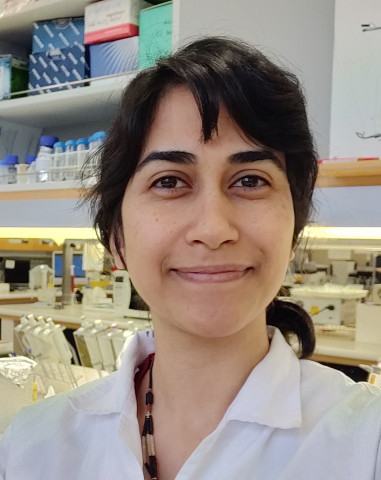
As a postdoctoral fellow in the Genomics Aotearoa Invasomics for Biosecurity project at the University of Waikato – Te Whare Wānanga o Waikato, Elahe Parvizi is investigating the genomic basis of invasion success and using genome-wide scanning methods to identify adaptive signatures that might predict invasion success in a set of high-priority exemplar insects.
Ultimately, this genomic information will be incorporated into a predictive machine learning tool to assess invasion and establishment potential.
About Elahe
Elahe completed both her Bachelor’s and Master’s degrees in Iran, in the capital city of Tehran. During her Master’s (University of Tehran), she studied phylogeography of freshwater crabs. For a short period during her Master’s, she also worked as an intern at the University of Regensburg (Germany), where she developed skills and interest in population genetics.
She completed her PhD at the University of Otago – Te Whare Wānanga o Ōtākou, where she used population genomic approaches to understand the impacts of an historic earthquake in the south of Dunedin on coastal communities. She used population genomics datasets of several intertidal and subtidal species (e.g., Durvillaea southern bull kelps and their holdfast epibiota) to infer fine-scale population differentiation and construct co-demographic histories of multiple species.
Areas of expertise
• Population genetics and genomics
• Phylogeography
Read more about Invasomics here